

Why it matters
Few presentations are as intimidating as a patient with a left ventricular assist device (LVAD), especially one who is unresponsive or whose device is alarming. Calling the LVAD center and arranging emergent transfer is necessary, but it is not a management plan on its own. The emergency physician has to assess perfusion and begin resuscitation at the bedside.
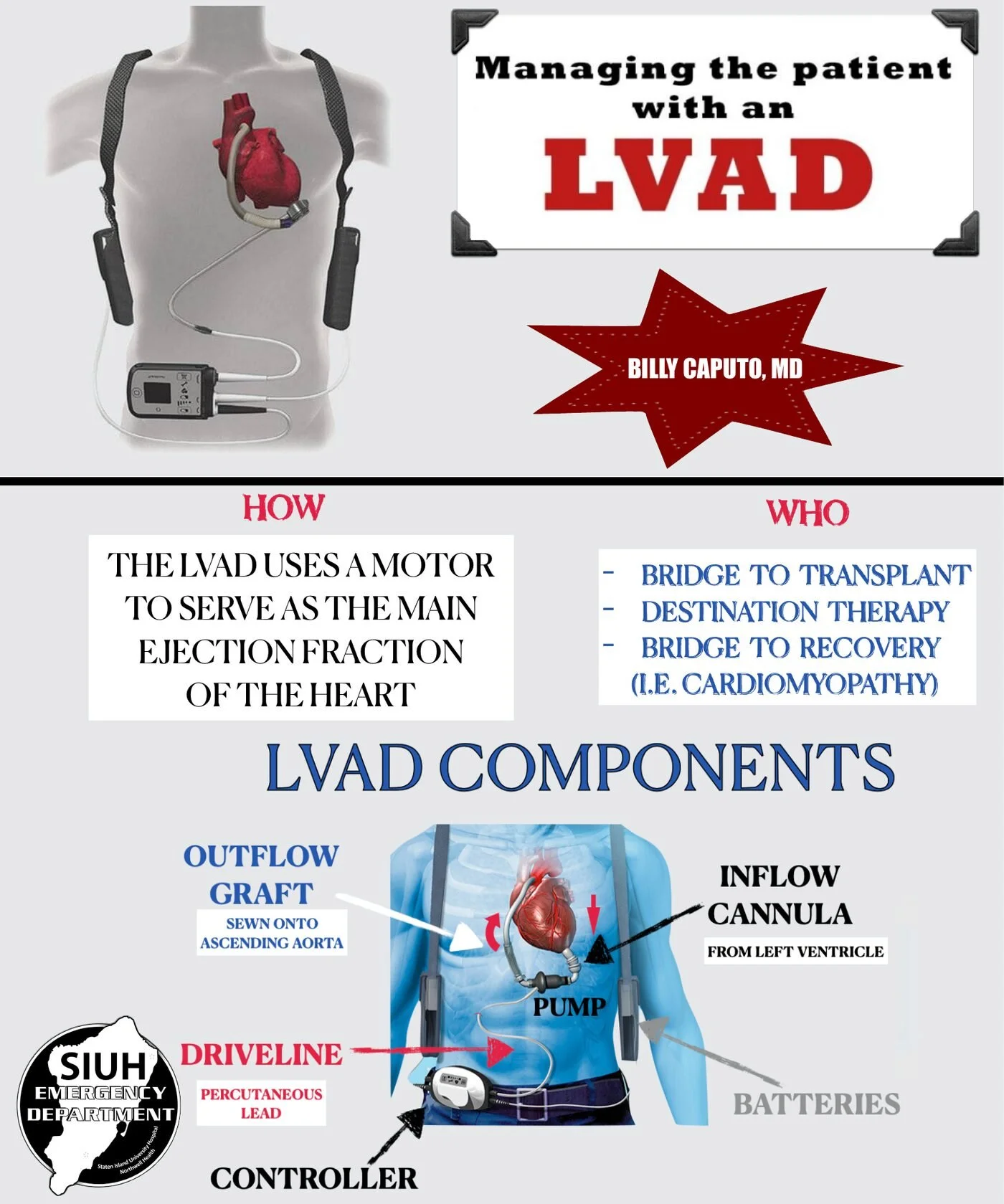
What an LVAD does
The LVAD uses a motor to take over most of the forward output (effectively the "ejection fraction") of the failing left ventricle.
Indications
Bridge to transplant
Destination therapy
Bridge to recovery (for example, cardiomyopathy)
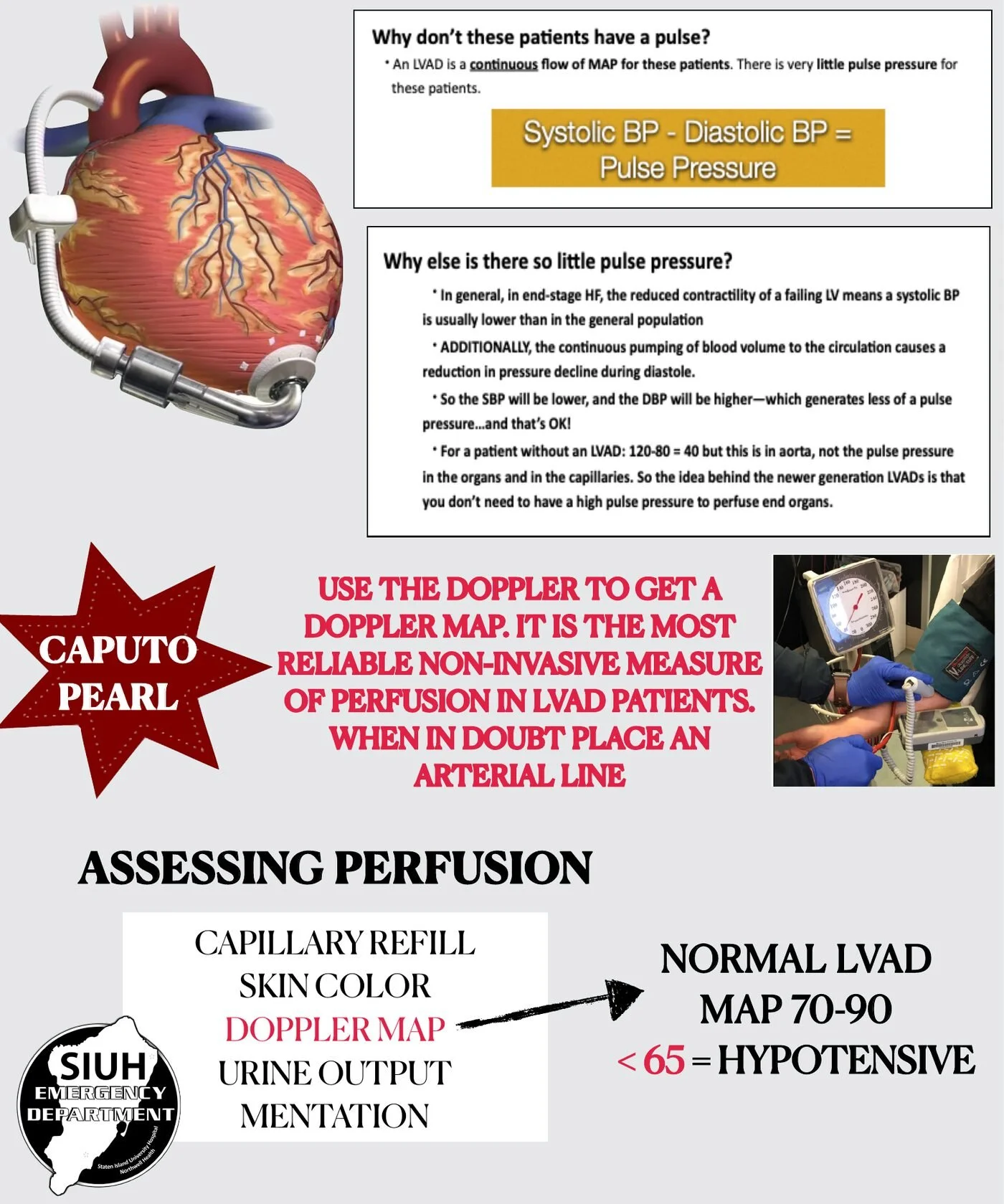
Assessing perfusion
Because flow is largely continuous, standard pulse and blood pressure assessment can be unreliable. Assess perfusion with:
Capillary refill
Skin color
Doppler mean arterial pressure (MAP)
Urine output
Mentation
Doppler MAP
Use a Doppler (manual cuff with Doppler probe) to obtain a Doppler MAP. It is the most reliable non-invasive measure of perfusion in LVAD patients.
Normal LVAD MAP: 70–90 mmHg. A MAP below 65 mmHg is hypotensive.
When in doubt, place an arterial line.
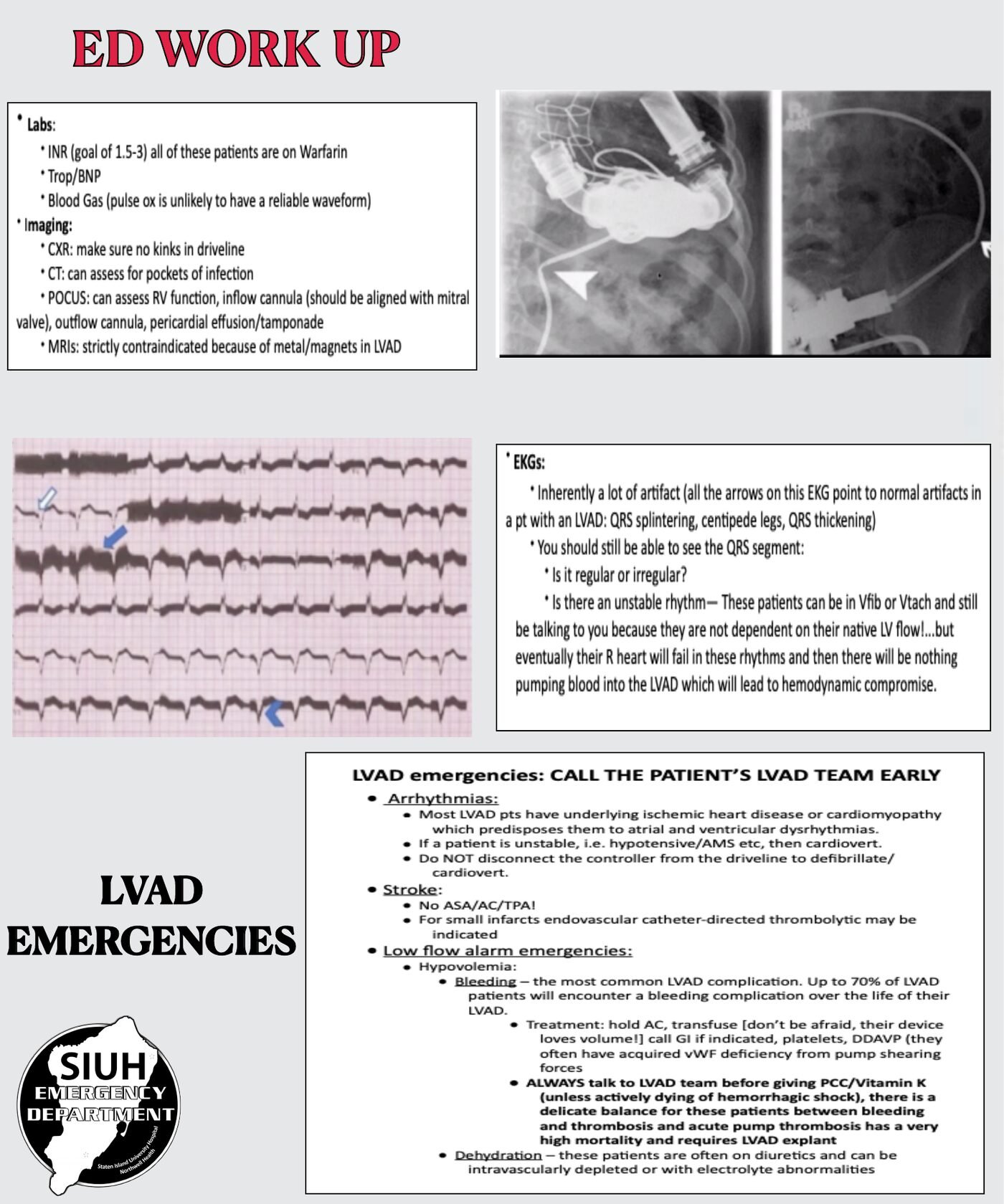
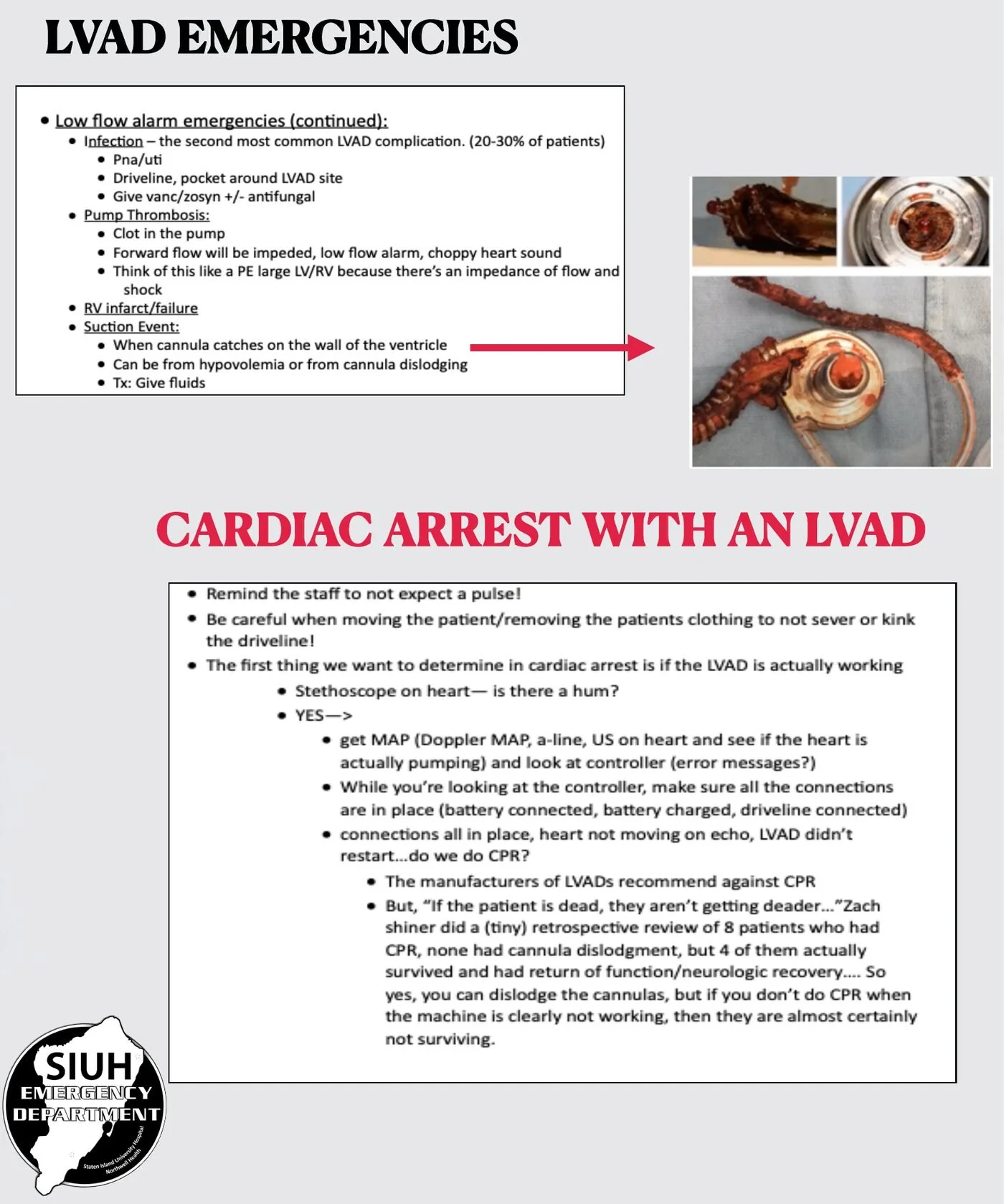
ED work-up, LVAD emergencies, and cardiac arrest
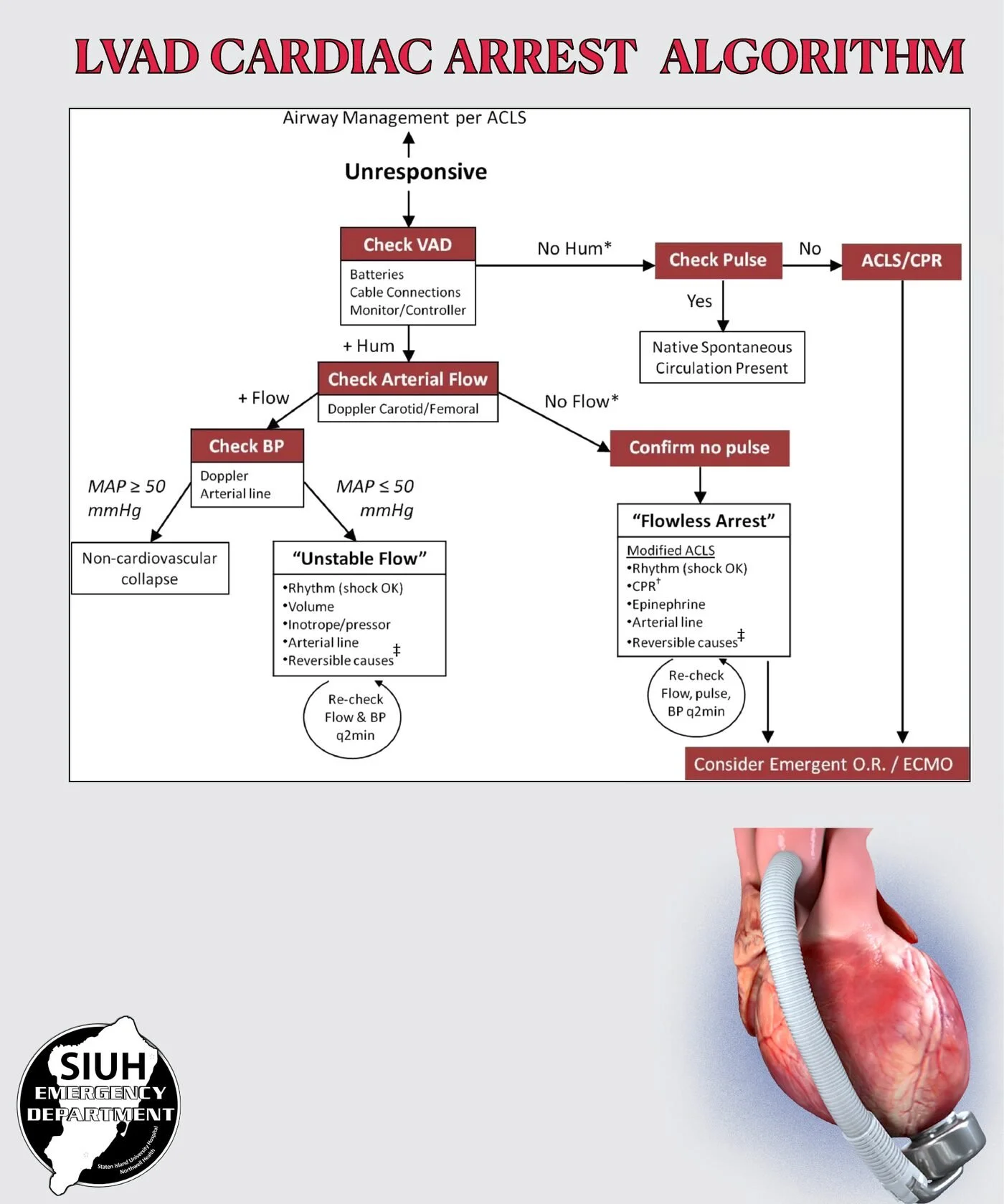
The figures below and the linked PDF cover the ED work-up, common LVAD emergencies, and an LVAD cardiac arrest algorithm.
Clinical pearls
Caputo pearl: Doppler MAP is your vital sign. Get it early, and place an arterial line if the reading is uncertain.
Assess the whole patient (mentation, skin, capillary refill, urine output), not only the device.
Contact the patient's LVAD center early, but begin resuscitation without waiting for them.
